
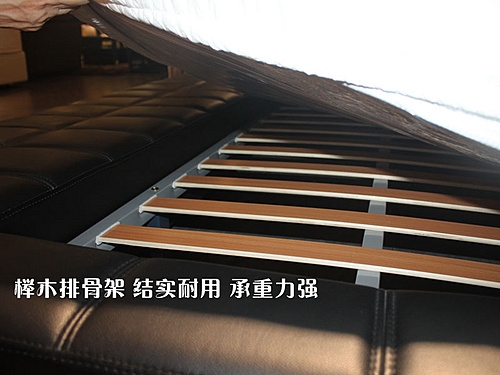
Introduction: Many consumers are willing to spend a lot of money on high-quality mattresses when buying bedding, yet they often overlook the slatted bed frames underneath. Acting as the foundation of a mattress, slats directly affect sleeping experience and service life. Problems including mattress sagging, squeaking and mold growth often stem from defective slats rather than the mattress itself.
Main text: Low-grade slatted frames come with numerous hidden risks. Excessively wide gaps between slats cause continuous suspended stress on mattress materials, leading to gradual sagging. Thin slats without reinforced structures tend to deform under long-term load and abrade the bottom fabric of the mattress. Loosely built frames produce annoying friction noise when you turn over during sleep. Materials with poor moisture resistance trap dampness and trigger mold on mattresses. Several factors matter when selecting slats: reasonable gap width, sufficient slat thickness, and frames equipped with reinforced cross beams and elastic ends. Spring mattresses, latex mattresses and coir mattresses have different characteristics and require matching slat structures to achieve stable support.
Conclusion: A durable and comfortable mattress relies on reliable slat support. When shopping for bedding, do not only focus on the mattress. Choose qualified bed slats and avoid structural defects. Proper matching not only improves sleep quality, but also protects your mattress and extends its service life.